Natures Smile vs. Regular Toothpaste: Formulation, Roles & Evidence
A common consumer misconception is that Natures Smile is a direct substitute for everyday toothpaste. In reality, they are two entirely different formulations designed for complementary, sequential roles within an oral hygiene routine.
RecedingGumline.com is supported in part by the makers of Natures Smile. All editorial and clinical educational content is independently developed, grounded in published periodontal literature, and based on cited peer-reviewed research. Commercial products are never presented as a substitute for professional periodontal diagnosis or surgical intervention.
Purchases occur externally on the official manufacturer website. Product information is independently evaluated against peer-reviewed dental literature and regulatory standards.
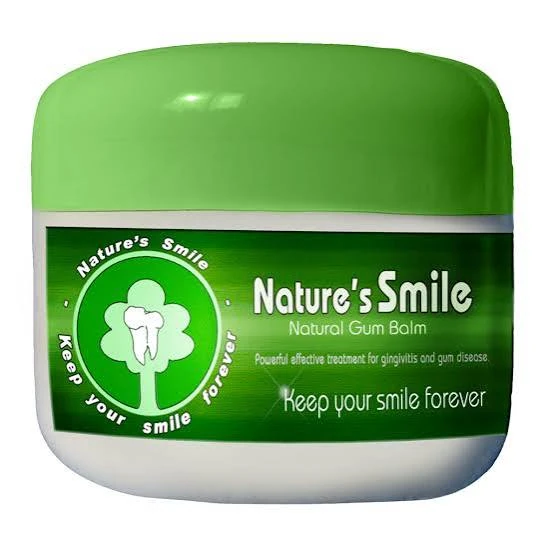
Product photograph. Text visible on label reflects manufacturer packaging claims.
The Clinical Verdict: Complementary, Not Competitive
Natures Smile and standard toothpaste are not direct substitutes; rather, they serve complementary roles. Standard toothpaste provides abrasive gross plaque cleaning and fluoride remineralization, while Natures Smile is formulated as a second-step botanical balm for gentle gingival contact without abrasive scouring.
Technical Comparison: Dimension by Dimension
Evaluate the technical differences between topical botanical balms and standard dentifrices:
| Comparison Dimension | Natures Smile Gum Balm | Standard Toothpaste |
|---|---|---|
| Primary Purpose Significance: Dentifrices focus on abrasive cleaning; balms focus on mucosal application. | Adjunctive topical gum hygiene support and soothing botanical contact | Gross food particle cleaning, stain removal, and fluoride cavity prevention |
| Abrasivity (RDA Value) Significance: Exposed root dentin is vulnerable to mechanical wear. Standard dentifrices utilize abrasive particles for cleaning, whereas the balm is formulated without abrasive silicas (though no standardized ISO 11609 RDA assay is published). | Described by the manufacturer as a non-abrasive balm formulation without coarse silicas; no independent standardized RDA measurement was identified | Typically RDA 50–150 (silica, calcium carbonate, hydrated alumina) |
| Fluoride Content Significance: Fluoride is critical for preventing root caries on receded roots; botanical balm should complement, not replace, fluoride hygiene. | Zero fluoride (100% botanical/herbal composition) | Standard 1,000–1,450 ppm sodium fluoride or stannous fluoride |
| Formulation Texture & Adhesion Significance: SLS can cause mucosal desquamation in sensitive individuals; lipid balms provide non-foaming contact. | Thick, lipid/herbal paste formulated to adhere to gingival tissues | Foaming surfactant paste (often containing Sodium Lauryl Sulfate / SLS) |
| Application Protocol Significance: Allows mechanical cleaning first, followed by concentrated botanical contact. | Applied as Step 2: angled specifically along the gingival margin after regular brushing | Applied as Step 1: brushed across all tooth crowns for 2 minutes |
| Tissue Regeneration Claim Significance: Neither product reverses anatomical attachment loss; both support the hygiene environment. | Cannot regrow lost gingival tissue or rebuild bone (unsupported manufacturer claims rejected) | Cannot regrow lost gingival tissue or rebuild bone |
Why Skipping Fluoride Toothpaste Is Dangerous for Receding Gums
Some natural health websites advocate throwing away standard toothpaste completely. For individuals with receding gums, this advice can have disastrous consequences.
When gums recede, softer root cementum and root dentin are exposed to oral bacteria. Root dentin demineralizes at a critical pH of 6.2 to 6.7 (compared to enamel, which only demineralizes below pH 5.5). Exposed roots are therefore dramatically more prone to rapid, aggressive root decay (caries) that can compromise the structural integrity of the tooth.
Fluoride delivery through standard dentifrice is essential because it incorporates fluorapatite into root surfaces, dramatically lowering the demineralization threshold. Using Natures Smile as an adjunctive Step 2 balm provides the soothing, low-abrasivity botanical benefits along the gumline without stripping away the protective fluoride barrier provided by Step 1.