Systemic Health & Diabetes Factors in Gum Recession
Periodontal tissues do not exist in isolation; they are deeply integrated into the host's systemic physiology, vascular circulation, and immune surveillance. In understanding receding gums care, clinicians recognize that uncontrolled diabetes mellitus, chronic salivary hypofunction (xerostomia), and autoimmune connective tissue diseases profoundly alter the periodontal microenvironment. These systemic disorders impair microvascular perfusion, amplify inflammatory collagen breakdown, and accelerate the rate and severity of gingival recession.
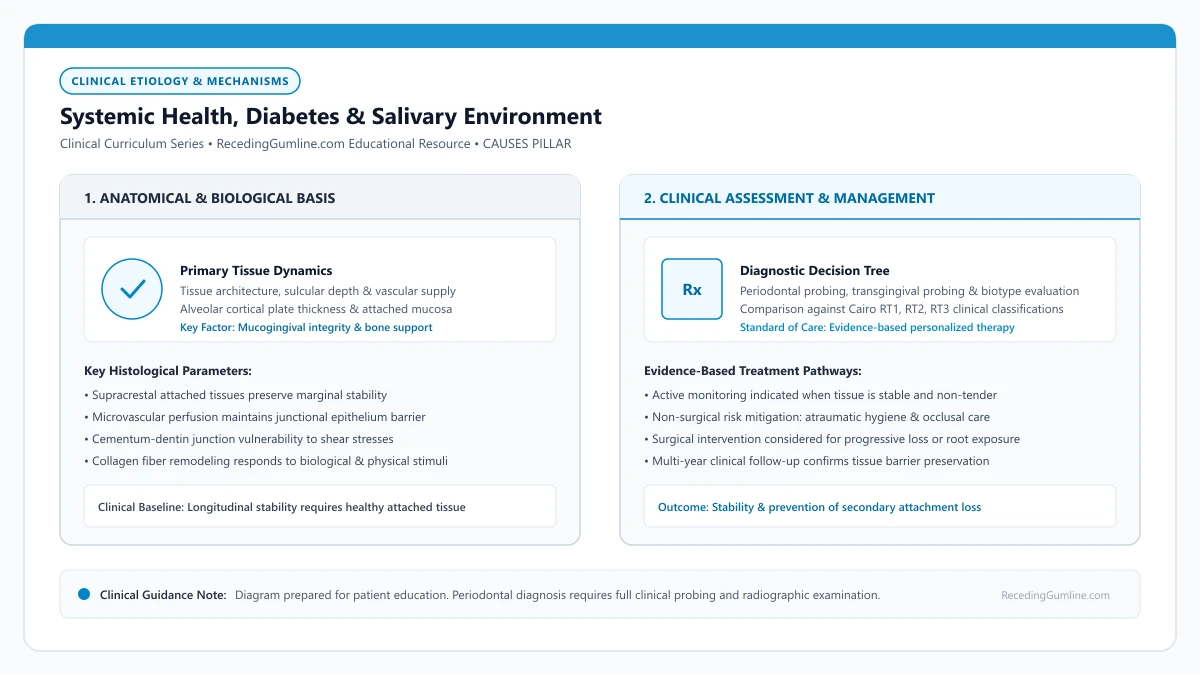
Educational illustration: Systemic Health, Diabetes & Salivary Environment. Clinical management requires comprehensive periodontal evaluation rather than isolated self-assessment.
Source: RecedingGumline.com Clinical Editorial Team (Proprietary educational diagram for RecedingGumline.com)
Diabetes Mellitus: The Hyper-Inflammatory & Microvascular Axis
The bidirectional relationship between diabetes mellitus and periodontal health is one of the most thoroughly documented axes in clinical medicine. Chronic hyperglycemia results in the non-enzymatic glycation of proteins and lipids, producing Advanced Glycation End-Products (AGEs). These compounds accumulate within the periodontal tissues and bind to specific receptors on endothelial cells, monocytes, and fibroblasts (RAGE).
AGE-RAGE binding hyper-activates cellular signaling cascades, triggering massive, unregulated secretion of pro-inflammatory mediators—including Interleukin-1 beta, Interleukin-6, Tumor Necrosis Factor-alpha, and receptor activator of nuclear factor-kB ligand (RANKL). This hyper-inflammatory state unleashes osteoclast activity and accelerates matrix metalloproteinase synthesis, causing extensive, rapid destruction of periodontal ligament fibers and alveolar bone.
Concurrently, diabetes induces microvascular basement membrane thickening and capillary endothelial dysfunction. This microangiopathy impairs blood flow, oxygen diffusion, and nutrient delivery to the gingival margin, while crippling the migration and phagocytic capacity of neutrophils. When minor mechanical abrasion or plaque accumulation occurs, diabetic tissue cannot repair effectively, leading to rapid, uncontained recession.
Key Etiological Insights
- Hyperglycemia produces Advanced Glycation End-Products (AGEs) that trigger sustained periodontal inflammation.
- Diabetic microangiopathy thickens vessel walls, causing chronic tissue hypoxia and compromised healing.
- Poorly controlled diabetes accelerates alveolar bone loss and exacerbates gingival attachment recession.
Salivary Hypofunction (Dry Mouth) & Loss of Protective Factors
Saliva is the primary physiological defense mechanism protecting oral tissues from microbial colonization and mechanical abrasion. Healthy salivary flow delivers secretory Immunoglobulin A (sIgA), lysozyme, lactoferrin, and histatins to neutralize pathogens, while mucins provide lubricative coatings that shield delicate marginal gingiva from physical friction during mastication and speech.
Xerostomia is highly prevalent, primarily driven by adverse side effects from hundreds of widely prescribed medications—including antihypertensives, anticholinergics, antidepressants, antihistamines, and diuretics. Systemic autoimmune conditions, such as Sjögren's syndrome, and head and neck radiation therapy cause severe, permanent destruction of salivary acinar cells.
In a dry oral environment, the lack of lubricative mucins causes food particles and toothbrushes to exert high frictional drag directly against the marginal gingiva, stripping away surface epithelium. Furthermore, the loss of buffering bicarbonate ions causes the oral pH to drop, favoring acidogenic and dysbiotic subgingival biofilms that drive marginal inflammation and recession.
Key Etiological Insights
- Salivary mucins provide essential lubricative shielding that prevents mechanical friction during eating and brushing.
- Medication-induced dry mouth is a frequent, unrecognized contributor to accelerated gingival wear.
- Reduced salivary clearance permits rapid plaque accumulation, triggering intense localized marginal inflammation.
Endocrine Fluctuations & Autoimmune Connective Tissue Disorders
Gingival tissues possess high concentrations of estrogen and progesterone receptors. Fluctuations in circulating sex hormones—such as those occurring during puberty, pregnancy, menopause, or oral contraceptive use—dramatically alter microvascular permeability.
Elevated progesterone levels cause dilation of gingival microvessels, increased vascular exudation, and an amplified inflammatory response to minimal plaque deposits. In postmenopausal women, systemic estrogen deficiency correlates with generalized osteopenia, accelerated alveolar bone resorption, and thinning of the keratinized oral mucosa.
Systemic autoimmune disorders—including rheumatoid arthritis, systemic lupus erythematosus, and scleroderma—share common pathophysiological pathways with periodontitis. Rheumatoid arthritis drives systemic osteoclastogenesis via the RANKL pathway, promoting synchronized bone resorption in both synovial joints and alveolar margins. Scleroderma causes progressive microvascular obliteration and dense tissue fibrosis that constricts the oral aperture and strips the gingival attachment.
Key Etiological Insights
- Hormonal shifts alter vascular permeability, amplifying gingival sensitivity to microbial biofilms.
- Postmenopausal estrogen decline accelerates systemic osteopenia and alveolar bone resorption.
- Autoimmune diseases like rheumatoid arthritis share bone-resorptive pathways that exacerbate periodontal loss.
Medical-Dental Collaboration & Systemic Stabilization
Achieving stable periodontal outcomes in medically complex patients requires close collaboration between the dental team and the patient's medical physicians. Periodontists monitor systemic indicators, such as Glycated Hemoglobin (HbA1c) levels in diabetic patients, knowing that achieving an HbA1c below 7.0% significantly improves periodontal healing capacity.
For patients suffering from medication-induced xerostomia, clinicians can coordinate with prescribing physicians to explore alternative pharmacotherapies with lower xerostomic side effects, or prescribe saliva stimulants (sialagogues like pilocarpine or cevimeline) and specialized salivary substitute gels.
Periodontal supportive maintenance is typically intensified to a 3-month recall interval for patients with systemic risk factors, incorporating localized antimicrobials, high-fluoride remineralizing agents, and atraumatic plaque control methods to shield vulnerable gumlines from cumulative damage.
Key Etiological Insights
- Maintaining tight glycemic control (HbA1c < 7.0%) directly enhances periodontal healing and tissue stability.
- Coordinating medication adjustments with physicians can relieve destructive salivary hypofunction.
- Intensive 3-month maintenance cleanings provide vital protective surveillance for medically compromised patients.
Interdisciplinary Protocols: Physician Coordination & Periodontal Stabilization
Managing periodontal recession driven or accelerated by systemic medical conditions requires close collaboration between the dental provider and the patient's managing physician. Isolated dental interventions often fail to achieve long-term stability if underlying systemic disease remains uncontrolled or poorly monitored.
For patients with Type 2 diabetes, monitoring longitudinal glycation trends via quarterly HbA1c tests provides critical guidance. Bringing HbA1c below 7.0% dramatically reduces microvascular basement membrane thickening, normalizes neutrophil chemotaxis, and restores physiological tissue healing capacity. Prior to elective soft-tissue grafting, obtaining medical clearance and ensuring glycemic stability is non-negotiable.
Similarly, in patients suffering from autoimmune conditions or medication-induced xerostomia, coordinated management involves adjusting offending pharmacological agents where feasible and introducing prescription sialagogues, neutral-pH fluoride varnishes, and topical salivary substitutes to maintain continuous mucosal hydration and defense.
Key Etiological Insights
- Close physician-periodontist collaboration is essential to control systemic drivers of tissue loss.
- Achieving HbA1c < 7.0% normalizes microvascular circulation and optimizes surgical healing.
- Coordinated pharmacological adjustments and salivary substitutes protect against xerostomia-driven recession.
Hormonal Fluctuations and Periodontal Tissues: Puberty, Pregnancy & Menopause
Periodontal tissues are biologically responsive endocrine target organs. Receptors for female sex hormones—specifically estrogen and progesterone—are present throughout gingival fibroblasts, endothelial cells, and epithelial layers. Fluctuations in these hormones alter vascular permeability, modulate immune responses, and alter subgingival microbial ecology, exaggerating inflammatory responses to minimal plaque and predisposing tissue to breakdown.
• Estrogen and progesterone receptors in gingival microvasculature modulate vascular permeability and blood flow.
• Pregnancy gingivitis peaks in the second and third trimesters, characterized by hyper-responsive bleeding to minimal plaque.
• Menopausal and postmenopausal estrogen declines reduce bone mineral density and cause mucosal thinning and dryness.
• Hormones do not cause recession alone; they act as potent modifiers that amplify tissue vulnerability to plaque and mechanical trauma.
Pregnancy and Puberty: Vascular Proliferation and Exaggerated Response
During pregnancy, circulating levels of progesterone and estrogen rise dramatically, reaching up to ten times their baseline luteal concentrations by the third trimester. Progesterone causes profound dilation of gingival microvessels, increased vascular permeability, and enhanced fluid leakage into tissues.
Consequently, even minuscule amounts of bacterial plaque that would normally cause zero symptoms trigger intense gingival erythema, swelling, and profuse bleeding on brushing. This heightened vulnerability peaks around months 6 to 8 of gestation before tapering after childbirth.
Elevated circulating levels of estrogen and progesterone during puberty, pregnancy, and menopause significantly alter gingival microvascular permeability and cellular turnover rates. Progesterone increases vascular dilation and capillary permeability, allowing fluid and inflammatory cells to leak into gingival tissues.
Key Etiological Insights
- Progesterone dramatically increases microvascular permeability and tissue edema
- Minor plaque deposits trigger exaggerated swelling and profuse bleeding
- Typically peaks during the second and third trimesters of pregnancy
Menopause and Estrogen Decline: Mucosal Thinning and Bone Loss
While pregnancy involves high hormone levels, perimenopause and menopause are characterized by a sharp drop in circulating estrogen. Estrogen is critical for maintaining collagen synthesis, mucosal hydration, and bone density.
Estrogen deficiency leads to thinning and desquamation of the oral epithelium, reduced keratinization, and persistent dry mouth (menopausal gingivostomatitis). Concurrently, systemic postmenopausal osteopenia or osteoporosis can accelerate the resorption of alveolar jawbone, weakening the bony scaffolding supporting receded gums.
This hyper-reactive hormonal state exaggerates the tissue’s inflammatory response to even minimal amounts of dental plaque biofilm, a condition termed pregnancy or pubertal gingivitis. Chronic swelling, edema, and frequent marginal bleeding can weaken fragile connective tissue fibers supporting the cervical margin.
Key Etiological Insights
- Estrogen declines lead to thinning of the oral epithelium and mucosal fragility
- Systemic bone loss (osteopenia) can accelerate alveolar bone crest resorption
- Reduced salivary output removes natural antimicrobial protection, facilitating plaque buildup
Clinical Care: Navigating Hormonal Shifts Safely
Because hormonal shifts act as amplifiers rather than primary causes, the most effective management is meticulous biofilm control. Pregnant patients should maintain second-trimester professional cleanings and use soft-bristled brushes to avoid tissue abrasion.
For menopausal patients experiencing mucosal burning or thinning, periodontists coordinate with medical providers to evaluate hormone replacement therapy (HRT) or recommend saliva substitutes, high-potency fluoride varnishes, and gentle phenotype-preserving oral hygiene products.
During post-menopausal years, declining estrogen levels can lead to osteopenia and desquamative gingivitis, causing the oral mucosa to become thin, fragile, and prone to rapid detachment. Comprehensive supportive periodontal therapy and diligent home care prevent temporary hormonal inflammation from causing permanent gingival recession.
Salivary buffering capacity and flow rates may also decrease during periods of hormonal imbalance, compounding the risk of cervical root decay and bacterial irritation along fragile, receded gingival margins.
Key Etiological Insights
- Professional dental cleanings during pregnancy are completely safe and medically recommended
- Meticulous plaque control eliminates the fuel that hormones amplify
- Saliva substitutes and remineralizing agents protect thinning menopausal oral tissues
Endocrine Mediators: Estrogen, Progesterone & Vascular Permeability
Female sex steroid hormones—specifically estrogen and progesterone—exert profound physiological effects on the periodontal attachment apparatus. Specific estrogen and progesterone receptors are densely expressed in human gingival fibroblasts, epithelial cells, and endothelial walls.
Surges in systemic hormone levels during puberty, ovulation, pregnancy, and hormone replacement therapy increase microvascular permeability and stimulate the proliferation of capillary loops within the gingival papillae. This heightened vascularity accelerates fluid exudation and accentuates the tissue's inflammatory response even to minuscule amounts of bacterial plaque.
In patients with a pre-existing thin periodontal phenotype, these cyclical or sustained inflammatory episodes cause recurrent tissue edema and cellular turnover that weaken marginal attachment and accelerate apical migration.
Key Etiological Insights
- Estrogen and progesterone receptors are abundant in gingival fibroblasts and endothelial cells.
- Hormonal surges increase microvascular permeability, exaggerating inflammatory responses to plaque.
- Recurrent cyclical inflammation in thin phenotypes can accelerate irreversible attachment loss.
Life-Stage Periodontal Protocols: Pregnancy, Menopause & Beyond
Managing hormone-mediated periodontal vulnerability requires tailored hygiene regimens aligned with life stages. During pregnancy, the elevated risk of pregnancy gingivitis and localized pyogenic granulomas warrants scheduling professional prophylactic cleanings every two to three months.
In perimenopause and postmenopause, the rapid drop in circulating estrogen leads to distinct oral changes, including desquamative gingivitis, xerostomia (dry mouth), and reduced systemic bone mineral density (osteopenia/osteoporosis). Systemic bone density loss can accelerate alveolar crest resorption, exacerbating recession.
Periodontists collaborate with patients' medical providers to monitor salivary flow and recommend calcium, vitamin D, and topical saliva substitutes to maintain protective mucosal defenses and protect exposed tooth roots.
Key Etiological Insights
- Pregnancy requires heightened professional prophylaxis frequency (every 2-3 months).
- Postmenopausal estrogen decline causes xerostomia and accelerated alveolar crest bone resorption.
- Interdisciplinary medical and dental collaboration protects periodontal stability across life stages.
Clinical Reality Check
Treating gingival recession in patients with active systemic diseases without addressing the systemic driver frequently leads to graft failure or recurrent tissue loss. Systemic metabolic stabilization must precede elective surgical root coverage.
Questions to Ask Your Dentist or Periodontist
- How is my diabetes or blood sugar control impacting my gum recession and healing capacity?
- Could my daily prescription medications be causing dry mouth that accelerates my gum wear?
- What artificial saliva substitutes or prescription rinses do you recommend to protect my gums?
- Should my physician and periodontist consult regarding my autoimmune condition and dental care?
- What specific homecare modifications should I make to protect my gums given my medical history?
- Is my increased gum bleeding related to my pregnancy, oral contraceptives, or hormonal changes?
- Are my receded gums showing signs of accelerated bone loss related to menopausal osteopenia?
- Is it safe for me to receive local anesthesia or cleanings during my current stage of pregnancy?
- What gentle oral hygiene modifications should I make while my gums are hormonally sensitive?
Unsure What Your Gum Changes Mean?
Take our free, evidence-based Gum Recession Assessment — approximately 3 minutes. Identify potential risk factors, evaluate symptoms, and receive personalized discussion questions for your dentist or periodontist.
Non-diagnostic educational triage. Private, secure, completed in your browser.
Related Educational Topics
Scientific Literature & Clinical Guidelines
4sources · Hide ▲
- Pihlstrom BL, Michalowicz BS, Johnson NW (2005).
"Periodontal diseases." The Lancet.
Clinical relevance: Peer-reviewed Lancet seminar review synthesizing global periodontal epidemiology, microbial etiology, host immunopathology, and systemic interactions, emphasizing prevention, biofilm disruption, and early risk factor modification.
- Chapple ILC, Mealey BL, Van Dyke TE, Bartold PM, Dommisch H, Eickholz P, et al. (2018).
"Periodontal health and gingival diseases and conditions on an intact and a reduced periodontium: Consensus report of workgroup 1 of the 2017 World Workshop on the Classification of Periodontal and Peri-Implant Diseases and Conditions." Journal of Clinical Periodontology.
Clinical relevance: Consensus report establishing diagnostic criteria for periodontal health and gingivitis across intact and reduced periodontia, defining clinical gingival health as <10% bleeding on probing without attachment loss and strictly differentiating gingivitis from periodontitis.
- Tonetti MS, Greenwell H, Kornman KS (2018).
"Staging and grading of periodontitis: Framework and proposal of a new classification and case definition." Journal of Clinical Periodontology.
Clinical relevance: Consensus framework establishing the multidimensional staging (severity and extent of periodontal tissue breakdown) and grading (biological rate of disease progression, incorporating smoking and diabetes as grade modifiers) for periodontitis. It addresses periodontitis diagnosis and staging, not the classification of localized gingival recession defects.
- Caton JG, Armitage G, Berglundh T, Chapple ILC, Jepsen S, Kornman KS, et al. (2018).
"A new classification scheme for periodontal and peri-implant diseases and conditions - Introduction and key changes from the 1999 classification." Journal of Clinical Periodontology.
Clinical relevance: Introductory consensus overview of the 2018 international classification scheme, introducing periodontal phenotype (incorporating gingival thickness and keratinized tissue width), defining gingival recession independently of inflammatory periodontitis, and standardizing mucogingival diagnostic terminology.
Important Medical Notice
The contents of RecedingGumline.com, including text, graphics, self-assessment calculators, and other materials, are intended solely for educational and informational purposes. This content is not intended to replace professional dental examination, diagnosis, or treatment. Always seek the advice of a qualified dentist, periodontist, or other licensed oral healthcare provider with any questions you may have regarding a medical or dental condition. Never disregard professional medical advice or delay seeking it because of something you read on this website.